2026 National Family Caregiver Support Program: $500 Monthly Aid

Latest developments on The 2026 National Family Caregiver Support Program: How to Access Up to $500 in Monthly Assistance for Elderly Relatives., with key facts, verified sources and what readers need to monitor next in Estados Unidos, presented clearly in Inglês (Estados Unidos) (en-US).
The 2026 National Family Caregiver Support Program: How to Access Up to $500 in Monthly Assistance for Elderly Relatives. is shaping today’s agenda with new details released by officials and industry sources. This update prioritizes what changed, why it matters and what to watch next, in a straightforward news format.
Understanding the 2026 National Family Caregiver Support Program
The 2026 National Family Caregiver Support Program marks a significant federal initiative designed to alleviate the financial and emotional burdens faced by family caregivers. This program aims to provide tangible support to individuals caring for elderly relatives, recognizing their invaluable contribution to society.
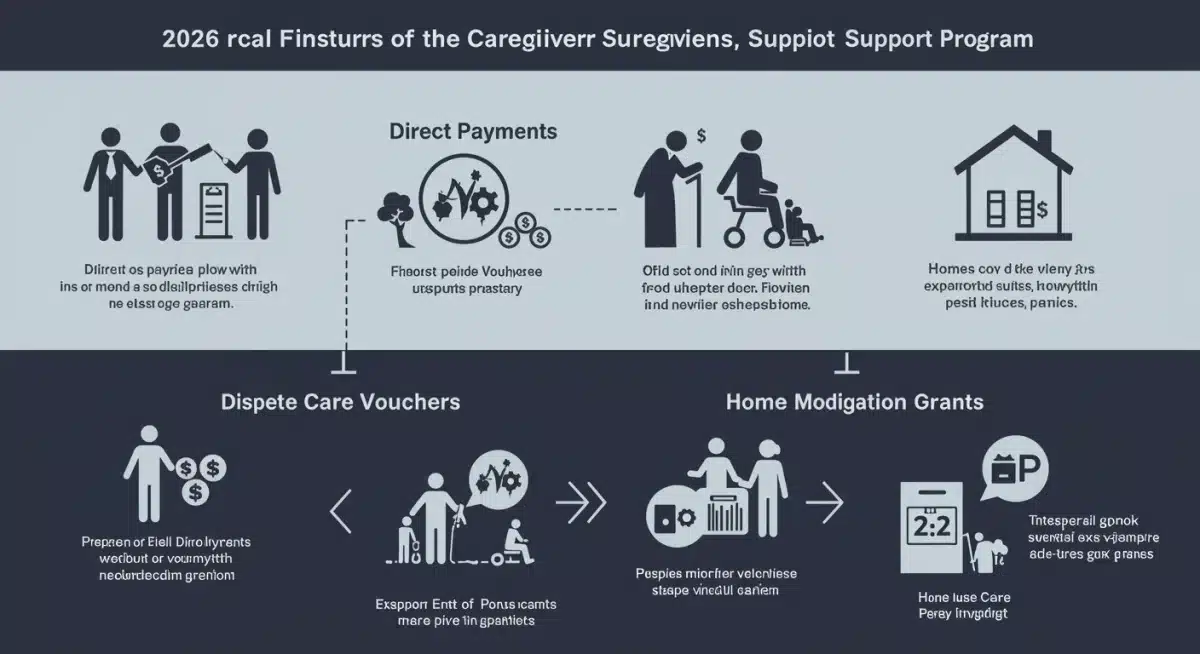
Key aspects of the program include direct financial assistance, offering up to $500 in monthly aid, alongside access to vital support services. These services are crucial for enhancing the quality of life for both caregivers and their elderly loved ones.
The overarching goal is to ensure that caregivers have the resources necessary to provide high-quality care without compromising their own well-being or financial stability. This proactive approach seeks to strengthen family care networks nationwide.
The program’s development has involved extensive research and collaboration among various governmental agencies and elder care advocacy groups. It reflects a growing recognition of the critical role family caregivers play in the healthcare system.
Officials emphasize that the 2026 National Family Caregiver Support Program is not merely a handout, but an investment in the health and stability of American families. It addresses a long-standing need for comprehensive support for those dedicated to caring for their aging family members.
Program Origins and Legislative Framework
The genesis of the 2026 National Family Caregiver Support Program traces back to increasing demographic shifts and the rising demand for elder care services. Legislators identified a clear gap in federal support for informal caregivers, leading to bipartisan efforts.
The legislative framework for the 2026 Caregiver Support Program was meticulously crafted over several years, incorporating feedback from caregiver associations, healthcare professionals, and economic experts. This comprehensive approach ensures the program is robust and sustainable.
Initial proposals focused on pilot programs, which demonstrated significant positive impacts on caregiver retention and elder well-being. These successful trials provided the empirical data necessary to secure broad congressional support for the nationwide rollout.
The program builds upon existing state-level initiatives, seeking to standardize and expand access to critical resources. It integrates lessons learned from diverse local programs, aiming for a consistent yet flexible implementation across all states.
This federal commitment is expected to spur further innovation in caregiving support, encouraging states to develop complementary programs. The ripple effect will benefit countless families preparing for or currently navigating the complexities of elder care.
Eligibility Requirements for Monthly Assistance
Accessing the up to $500 in monthly assistance through the 2026 National Family Caregiver Support Program requires meeting specific eligibility criteria. These guidelines are designed to ensure that aid reaches those most in need and that resources are allocated effectively.
Applicants must demonstrate that they are providing regular care for an elderly relative, defined as someone generally aged 60 or older, who requires assistance with at least two activities of daily living (ADLs). These ADLs include tasks like bathing, dressing, eating, and mobility.
Furthermore, there are income and residency requirements for both the caregiver and the care recipient. These financial thresholds are set to prioritize low to middle-income families, ensuring the program serves its intended demographic.
The elderly relative must reside in the United States and be a citizen or legal resident. The caregiver must also be a U.S. citizen or legal resident and typically live in the same household or provide substantial, regular in-person care.
Documentation verifying the relationship, the care recipient’s age and health status, and household income will be required during the application process. Clear guidelines are available through local Area Agencies on Aging (AAAs).
Specific medical certifications from a physician may be necessary to confirm the elderly relative’s need for care. This ensures that the program supports individuals with genuine functional limitations.
Income and Residency Verification
Income verification for the 2026 National Family Caregiver Support Program involves submitting recent tax returns, pay stubs, or other official financial documents. These are crucial for determining eligibility based on established federal poverty guidelines and adjusted income levels.
Residency verification typically requires proof of address for both the caregiver and the care recipient, such as utility bills, lease agreements, or state-issued identification. This confirms that applicants are within the program’s geographic purview.
These verification steps are critical to maintaining the integrity of the program and ensuring fair access to its benefits. Transparency in the application process is a core principle guiding the program’s implementation.
Applicants experiencing difficulty gathering required documentation are encouraged to seek assistance from local support centers. These centers often provide guidance and resources to navigate the administrative hurdles.
Understanding these requirements upfront can significantly streamline the application process and prevent potential delays. Early preparation is key to a successful application for the 2026 Caregiver Support Program.
Application Process: Step-by-Step Guide
Applying for the 2026 National Family Caregiver Support Program involves a structured process designed for clarity and accessibility. Understanding each step ensures a smoother journey towards receiving crucial monthly assistance.
The initial step typically involves contacting your local Area Agency on Aging (AAA) or a designated state elder care office. These agencies serve as primary points of contact for information and application materials for the 2026 Caregiver Support Program.
Following initial contact, applicants will receive comprehensive application packets that detail all required forms and supporting documentation. It is vital to meticulously complete these forms and gather all necessary paperwork.
Once the application is submitted, a review process commences, often involving an in-home assessment by a social worker or case manager. This assessment verifies the care recipient’s needs and the caregiving environment.
Upon approval, beneficiaries will be notified and provided with details regarding the disbursement of the $500 monthly assistance and access to additional support services. The entire process is designed to be as supportive as possible for families.
Required Documentation Checklist
- Proof of identity and residency for caregiver and care recipient (e.g., driver’s license, utility bills).
- Income verification documents (e.g., tax returns, pay stubs, Social Security statements).
- Medical documentation confirming the elderly relative’s need for assistance with ADLs.
- Proof of relationship between caregiver and care recipient (e.g., birth certificates, marriage licenses).
Thorough preparation of these documents before starting the application can significantly reduce processing times. Incomplete applications are often the primary cause of delays in receiving benefits from the 2026 National Family Caregiver Support Program.
Beyond Financial Aid: Comprehensive Support Services
While the up to $500 in monthly assistance is a cornerstone of the 2026 National Family Caregiver Support Program, it is complemented by a robust suite of comprehensive support services. These services are designed to address the multifaceted challenges faced by family caregivers.
These offerings include respite care, which provides temporary relief for caregivers, allowing them to rest and attend to personal needs without worrying about their loved one’s care. This is crucial for preventing caregiver burnout.
The program also facilitates access to training and educational resources, equipping caregivers with enhanced skills and knowledge in areas such as dementia care, medication management, and safe patient handling. This empowers caregivers to provide even better care.
Furthermore, counseling and support groups are integral components, offering emotional support and a platform for caregivers to share experiences and coping strategies. These networks are vital for mental well-being and reducing feelings of isolation.
Legal and financial planning assistance is also available, helping families navigate complex issues related to estate planning, benefits enrollment, and long-term care financing. This holistic approach ensures caregivers are supported from multiple angles.
Respite Care and Training Initiatives
Respite care, a vital element of the 2026 National Family Caregiver Support Program, offers temporary relief, ranging from a few hours to several days. This allows caregivers much-needed breaks, reducing stress and improving their overall health.
Training initiatives under the 2026 Caregiver Support Program are tailored to enhance practical caregiving skills. Workshops cover topics from first aid to managing behavioral challenges, ensuring caregivers are well-prepared for various situations.
These services are critical for sustaining the long-term commitment required for family caregiving. They underscore the program’s dedication to supporting the whole caregiver, not just their financial needs.
Access to these resources can be a game-changer for many families, transforming a demanding role into a more manageable and sustainable one. The program aims to create a supportive ecosystem around every family caregiver.
By investing in both financial and service-based support, the 2026 National Family Caregiver Support Program sets a new standard for federal assistance. It acknowledges that caregiving is a complex endeavor requiring diverse forms of aid.
Impact and Benefits for Elderly Relatives and Families
The implementation of the 2026 National Family Caregiver Support Program is projected to yield profound positive impacts for elderly relatives and their families across the United States. The benefits extend far beyond the direct financial assistance.
For elderly relatives, the program means an enhanced ability to age in place, surrounded by familiar comforts and loved ones, rather than being compelled to enter institutional care prematurely. This significantly improves their quality of life and emotional well-being.
Families will experience reduced financial strain, as the up to $500 monthly assistance can offset significant care-related expenses, from medical supplies to specialized equipment. This financial relief can prevent families from depleting their savings or going into debt.

The provision of respite care and training services will lead to improved caregiver health and reduced stress levels. This, in turn, translates to more consistent and higher-quality care for the elderly relative, creating a virtuous cycle of support.
Moreover, the program fosters stronger family bonds by mitigating conflicts often arising from caregiving stress and financial pressures. It empowers families to navigate the challenges of aging with greater unity and resources.
Long-Term Societal and Economic Effects
The long-term societal effects of the 2026 National Family Caregiver Support Program are anticipated to be substantial, contributing to a more resilient and compassionate society. It reinforces the value of family-based care within the broader healthcare landscape.
Economically, the program is expected to reduce overall healthcare costs by preventing premature institutionalization and supporting home-based care, which is generally more cost-effective. This represents a strategic investment in public health infrastructure.
The increased support for caregivers may also enable some to remain in the workforce, thereby contributing to the economy while balancing their caregiving responsibilities. This dual benefit underscores the program’s thoughtful design.
By legitimizing and supporting the work of family caregivers, the 2026 Caregiver Support Program helps to professionalize an often-overlooked sector of the care economy. It acknowledges the expertise and dedication required for this essential role.
Ultimately, the program aims to create a sustainable model for elder care that prioritizes dignity, family involvement, and community support, setting a precedent for future social welfare initiatives.
Navigating Common Challenges and Solutions
While the 2026 National Family Caregiver Support Program offers immense benefits, families may encounter certain challenges during the application process or in utilizing the available resources. Awareness of these common hurdles can lead to proactive solutions.
One frequent challenge involves navigating the bureaucratic aspects of the application, including gathering extensive documentation and understanding complex eligibility criteria. Many families find this overwhelming without proper guidance.
Another common issue is the initial wait time for application processing and approval, which can sometimes be lengthy due to high demand. Families need to plan accordingly and explore interim support options if immediate assistance is required.
To address these challenges, the program emphasizes the role of local Area Agencies on Aging (AAAs) as primary support hubs. These agencies offer personalized assistance, helping applicants complete forms and understand requirements for the 2026 Caregiver Support Program.
Furthermore, advocacy groups and non-profit organizations often provide supplementary resources and guidance, acting as valuable allies for caregivers. They can offer insights into navigating delays and accessing alternative forms of support.
Resources for Overcoming Hurdles
- Local Area Agencies on Aging (AAAs): direct assistance with applications, eligibility questions, and resource navigation.
- Caregiver advocacy groups: offer peer support, educational materials, and help with problem-solving.
- Online portals and helplines: provide accessible information and immediate answers to common queries for the 2026 National Family Caregiver Support Program.
These resources are designed to ensure that no family feels isolated or overwhelmed by the process. The program’s success relies on effective outreach and support for all potential beneficiaries.
Future Outlook and Program Expansion
The future outlook for the 2026 National Family Caregiver Support Program appears promising, with ongoing discussions about potential expansions and enhancements. Policymakers are closely monitoring its initial impact and effectiveness across different regions.
Early reports suggest positive outcomes, particularly in reducing caregiver stress and improving the overall well-being of elderly relatives. These findings are crucial for advocating for sustained funding and broader program reach.
There is considerable interest in expanding the program’s scope to include a wider range of caregiving situations, such as those involving individuals with disabilities or younger family members with chronic conditions. This would extend the impact of the 2026 Caregiver Support Program even further.
Technological integration is also a key area for future development, with potential for digital platforms to streamline application processes, facilitate access to online training, and connect caregivers with support networks more efficiently.
Continued advocacy from caregiver organizations and senior citizen groups will be vital in shaping the program’s evolution and ensuring it remains responsive to the changing needs of American families. The 2026 National Family Caregiver Support Program is a dynamic initiative.
Potential Legislative Amendments
Potential legislative amendments to the 2026 National Family Caregiver Support Program could include adjustments to income thresholds, making the program accessible to a broader segment of the population. These changes would reflect evolving economic realities.
Discussions are also underway regarding increasing the monthly assistance amount beyond $500, recognizing the rising costs of living and caregiving expenses. Such an increase would provide even greater financial relief for beneficiaries of the 2026 Caregiver Support Program.
The inclusion of additional eligible services, such as specialized therapy for caregivers or more extensive home modification grants, is also being considered. These enhancements aim to offer more comprehensive and tailored support.
Any amendments would undergo thorough review and public comment periods, ensuring that changes align with the program’s core mission and address the most pressing needs of caregivers. The legislative process for the 2026 Caregiver Support Program remains transparent.
These ongoing conversations highlight the program’s adaptability and the commitment of lawmakers to continually improve support for family caregivers across the nation.
| Key Point | Brief Description |
|---|---|
| Monthly Assistance | Up to $500 in direct financial aid for eligible family caregivers. |
| Eligibility Criteria | Care for elderly (60+), ADL needs, income & residency requirements. |
| Support Services | Respite care, training, counseling, and legal/financial aid. |
| Application Process | Contact local AAA, complete forms, undergo assessment, receive approval. |
Frequently Asked Questions About the 2026 Caregiver Support Program
The primary goal is to provide financial and practical support to family caregivers of elderly relatives. It aims to reduce caregiver burden, enable seniors to age in place, and enhance the overall well-being of both caregivers and care recipients.
Eligibility typically requires caring for an elderly relative (60+) who needs help with daily activities. Income and residency requirements for both the caregiver and care recipient also apply, focusing on low to middle-income families.
The application process usually begins by contacting your local Area Agency on Aging (AAA) or state elder care office. They will provide necessary forms and guide you through documentation submission and any required assessments.
Beyond the monthly assistance, the program provides crucial services like respite care, caregiver training and education, counseling, and access to support groups. It also offers legal and financial planning assistance for comprehensive support.
The program is expected to significantly reduce financial strain and stress for families, improve the quality of care for elderly relatives, and potentially lower overall healthcare costs by supporting home-based care. It strengthens family bonds and community support.
Looking Ahead: Sustaining Family Caregiving
The 2026 National Family Caregiver Support Program represents a pivotal step towards a more supportive framework for elder care in the United States. Its initial success and the ongoing discussions about expansion highlight a growing recognition of caregivers’ indispensable role.
What happens now involves continued monitoring of the program’s effectiveness, particularly in reaching diverse communities and addressing specific regional needs. Families should stay informed through official channels and local Area Agencies on Aging.
Next steps will likely include legislative reviews and potential adjustments to ensure the program remains agile and responsive to evolving demographic trends and economic pressures. The future of the 2026 National Family Caregiver Support Program is bright, promising sustained relief for many.